Winter excavation in Edmonton can be practical for some projects, but it needs a site-specific plan for frost, access, water, hauling and the next construction step. The right question is not simply whether equipment can dig frozen ground. It is whether the work can be completed safely and leave suitable conditions for foundations, utilities, backfill or grading.
Shan Construction is an Edmonton construction contractor providing excavation and grading, site preparation, material hauling and related groundwork. The team serves Edmonton and nearby communities including Leduc, Beaumont, St. Albert and Sherwood Park. This guide helps homeowners, builders and property managers start a useful winter-scope conversation.
Can excavation be done in Edmonton during winter?
Sometimes. A contractor first needs to review the drawings, ground conditions, access route, snow management, temperature outlook and the planned handoff. Work that exposes bearing surfaces, receives fill, installs drainage or requires concrete-related sequencing needs more planning than simple snow clearing or surface work.
Frozen ground is not a substitute for excavation protection. Alberta’s excavating and tunnelling rules state that natural freezing cannot be used as an alternative or partial alternative to required soil stabilization. The work plan must address the actual conditions and applicable safety requirements.
Five decisions that shape a winter excavation plan
1. What must be protected from freezing?
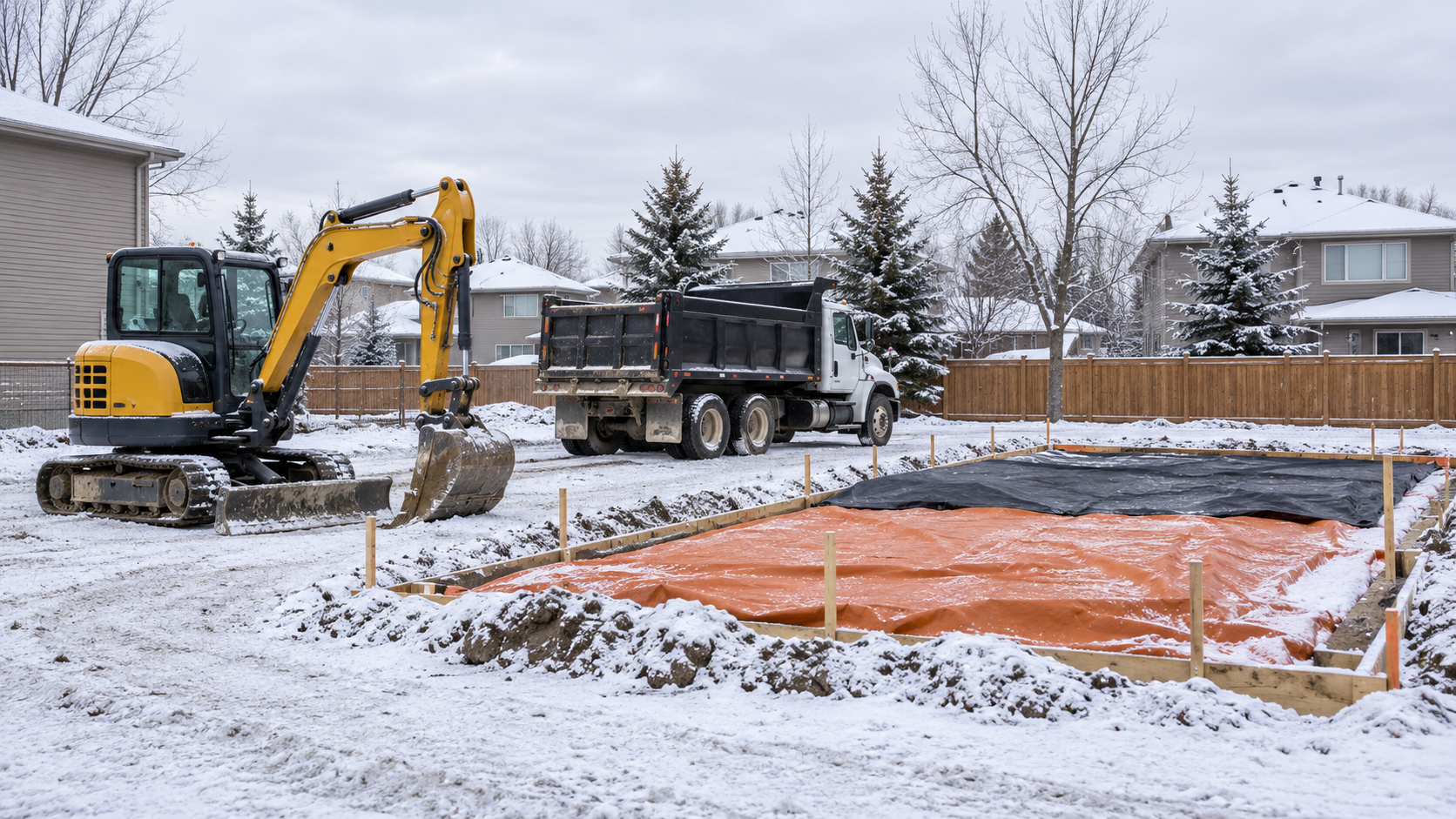
Make the next step clear: foundation work, utility installation, drainage, aggregate placement, backfill or rough grading. Exposed subgrade, foundation surfaces and material to be placed may need sequencing or protection so the project does not create a problem for the next trade. Alberta construction specifications describe protecting excavated and foundation surfaces against freezing when fill, structures or pipes will follow.
2. Is the site accessible for equipment and trucks?
An Edmonton infill lot can have a narrow driveway, alley access, parked vehicles and snow storage competing for room. A rural or acreage site near Leduc may have more space but a longer haul route. Confirm equipment access, a safe truck turnaround, where snow will go, and which surfaces must be protected before scheduling work.
3. How will soil and materials be handled?
Ask whether excavated material will remain on site, be hauled away or be reused later. Frozen chunks, wet material and limited stockpile space can affect the sequence. Shan Construction’s trucking and slinger service can support hauling or placing materials where access allows; confirm the actual equipment and scope for the property.
4. Are utilities and existing services identified?
Locate planning still matters in winter. Before ground disturbance, confirm who will request locates, review marks and identify private lines or other services that may need separate investigation. Alberta OHS rules require buried facilities that may be affected to be identified and marked before the work begins. Discuss access around locates and how marks will be preserved if snow or activity affects visibility.
5. What is the weather contingency?
Set clear expectations for when work may pause, how the site will be secured, and whether protection, snow removal, heating or schedule changes are included. Do not assume a date alone guarantees conditions. A written scope should explain what happens if weather, groundwater, frost depth or an unexpected site condition changes the agreed work.
What to include in a winter site-prep request
- Site address, drawings, elevations and the desired next construction step.
- Current photos showing access, snow storage, fencing, trees and nearby structures.
- Expected excavation depth, utility information and any existing soil or geotechnical information.
- Whether soil stays on site, is removed, or will be replaced with specified material.
- Who coordinates foundation, utility, drainage, concrete and inspection timing.
- How the contractor will document and approve changed conditions or extra work.
For a project that includes foundation drainage, review the sequence with the foundation contractor and consider weeping tile installation and repair as part of the broader plan. If an older structure must be removed before site preparation, ask about demolition and disposal and the handoff to excavation.
Frequently asked questions about winter excavation in Edmonton
Is winter excavation more expensive?
It can involve additional planning, protection, access work, snow management, hauling or weather contingencies. The cost depends on the scope and site conditions, so compare written inclusions and exclusions rather than relying on a generic seasonal price.
Can frozen soil be used as fill?
Do not assume it can. The project design, material requirements and conditions determine what is suitable. Discuss proposed materials, placement and compaction with the contractor and the parties responsible for the next stage.
Can Shan Construction help outside Edmonton?
Yes. Shan Construction serves Edmonton, Leduc, Beaumont, St. Albert, Sherwood Park and surrounding Alberta communities. Share the exact address, drawings and intended schedule to confirm project fit.
Plan your Edmonton winter site work clearly
Bring the site details, construction sequence and access constraints to the first conversation. Then contact Shan Construction to discuss excavation, grading, hauling and coordinated site preparation, or call 780-468-9377.