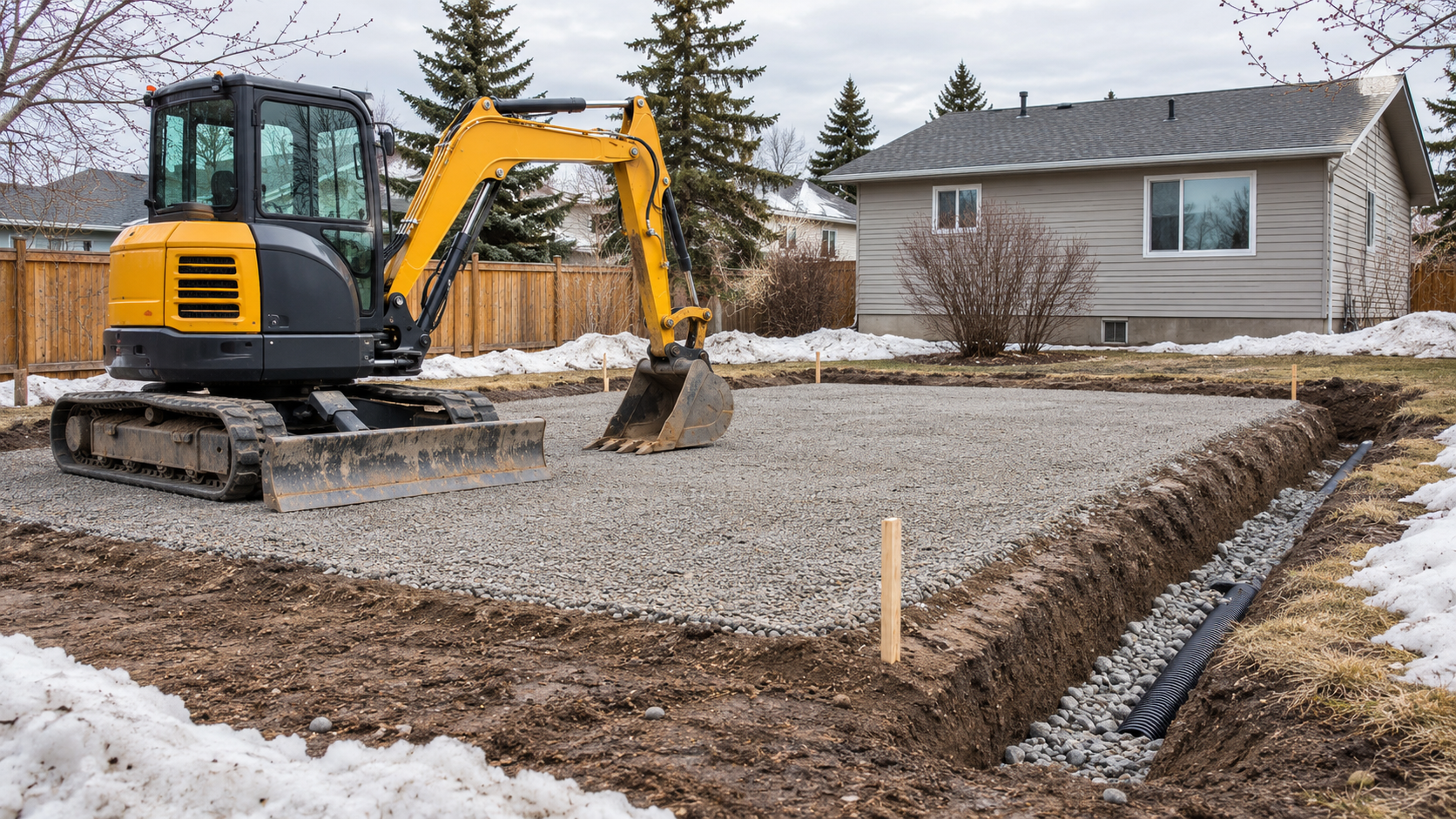
A backyard drainage trench in Edmonton can help move persistent surface water, but it is only useful when it is part of a clear plan for the water source, grading and discharge route. A trench is not automatically the right answer for every wet lawn, downspout outlet or foundation concern. The site first needs to be assessed so water is managed without creating a problem at the house, a neighbour’s property or a public area.
Shan Construction is an Edmonton construction contractor providing excavation and grading, drainage-related groundwork, hauling and site preparation. The team serves Edmonton, Sherwood Park, St. Albert, Beaumont, Leduc and nearby Alberta communities. This guide explains what a homeowner or builder should clarify before requesting backyard drainage work.
When might a backyard drainage trench be worth discussing?
Start by observing where water starts, where it travels and where it remains after ordinary rain or snowmelt. A drainage trench may be part of a solution when a low area repeatedly stays wet, runoff crosses a usable yard, or surface water needs a controlled route away from planned landscaping or structures. The final scope may include regrading, a swale, aggregate, drainage pipe, downspout changes or a combination of measures.
If water is appearing at the foundation, do not assume a backyard trench alone will solve it. Foundation conditions may call for a closer look at the grade beside the house, roof drainage and weeping tile installation or repair. Explain exactly where and when the water appears so the right scope can be considered.
Four questions to answer before digging
1. What is feeding the water?
Common sources include roof downspouts, a sloped neighbouring lot, snow storage, compacted soil, a high spot that redirects runoff, or a low area created by previous work. Photos taken during or shortly after rain can be more useful than a general description. Mark the wet area, any visible flow path and nearby structures.
2. Where can the water safely go?
A drainage plan needs a lawful, practical discharge path. Do not direct water toward a neighbour, a sidewalk, a lane or the foundation. Edmonton requirements and property conditions can change, so confirm the applicable municipal rules and any lot-specific constraints before finalizing a plan. A contractor can assess the construction work; the owner may also need to coordinate design, approvals or utility information.
3. Are utilities or private lines in the work area?
Before any excavation, identify the work area and arrange the required utility locates. Marks for public utilities do not necessarily identify every private line, irrigation pipe, landscape wire or other installation. Share known site information and allow time for safe planning; never treat a drainage trench as a casual do-it-yourself dig.
4. What work needs to happen first?
Drainage work often follows demolition, landscaping removal, foundation repair or site access preparation. If soil or old materials must leave the property, Shan Construction’s demolition and disposal service can be discussed as part of the sequence. For aggregate, topsoil or other material movement, ask whether the trucking and slinger service suits the access and placement needs.
What a clear Edmonton drainage scope should include
- The location of the wet area, the apparent water source and photos from wet conditions.
- Known property lines, access limits, fences, trees, decks and underground services.
- The proposed grade or drainage route and where water will discharge.
- Whether excavated soil stays on site, is reused or is hauled away.
- The material and restoration expectations: aggregate, pipe, topsoil, sod, landscaping or paving handoff.
- Who approves changes if buried conditions, soil or access differ from expectations.
For new builds, additions and larger site work, drainage should be coordinated with the overall grade plan and construction sequence. Shan Construction can discuss the excavation and grading component alongside the next contractor or trade, rather than treating a trench as an isolated task.
Drainage trench, swale or weeping tile: what is the difference?
A surface swale is a shaped route that guides water across the finished ground. A drainage trench is excavated below the surface and may use aggregate or pipe to collect and direct water. Weeping tile is foundation drainage installed around a building to collect water near the foundation. These terms are sometimes used loosely, but they solve different site conditions. The right approach depends on the source of water and the location that needs protection.
Frequently asked questions
How deep should a backyard drainage trench be in Edmonton?
There is no one correct depth. It depends on what the trench must collect, the route, the grade, nearby services and whether pipe or aggregate is specified. A contractor should assess the site before recommending a scope.
Will a drainage trench fix water in my basement?
Not necessarily. Basement moisture can involve surface grading, downspouts, foundation drainage, cracks or other building conditions. Describe the symptoms and have the full situation assessed instead of assuming one exterior feature is the complete fix.
Does Shan Construction work outside Edmonton?
Yes. Shan Construction serves Edmonton, Sherwood Park, St. Albert, Beaumont, Leduc and surrounding Alberta communities. Provide the address, photos and project goal to confirm the work is a fit.
Get a site-specific drainage conversation started
Bring photos, the property address and a simple description of where water starts and ends. Then contact Shan Construction to discuss excavation, grading, drainage-related site preparation and material hauling, or call 780-468-9377.