Weeping tile replacement in Edmonton becomes important when foundation drainage stops doing its job and water starts lingering where it should be redirected away. Many property owners first notice the problem as a damp basement smell, water marks, soft ground beside the house, or repeated moisture issues after heavy rain and spring thaw. By the time those signs are obvious, the original drainage system may already be clogged, damaged, undersized, or simply too old to perform well in Alberta conditions.
For homeowners, builders, and property managers in Edmonton, Leduc, Beaumont, Sherwood Park, St. Albert, Nisku, Spruce Grove, Fort Saskatchewan, and nearby Alberta communities, this is not only a basement issue. Failing foundation drainage can affect grading performance, soil stability near the home, and how moisture pressure builds against the foundation wall over time.
Shan Construction provides weeping tile installation and repair in Edmonton along with excavation and grading service, demolition and disposal service, trucking and slinger support, and broader construction services in Edmonton. That matters because drainage replacement around a foundation often connects to excavation access, backfill quality, grading correction, and cleanup work around the property.
What Weeping Tile Replacement Actually Means
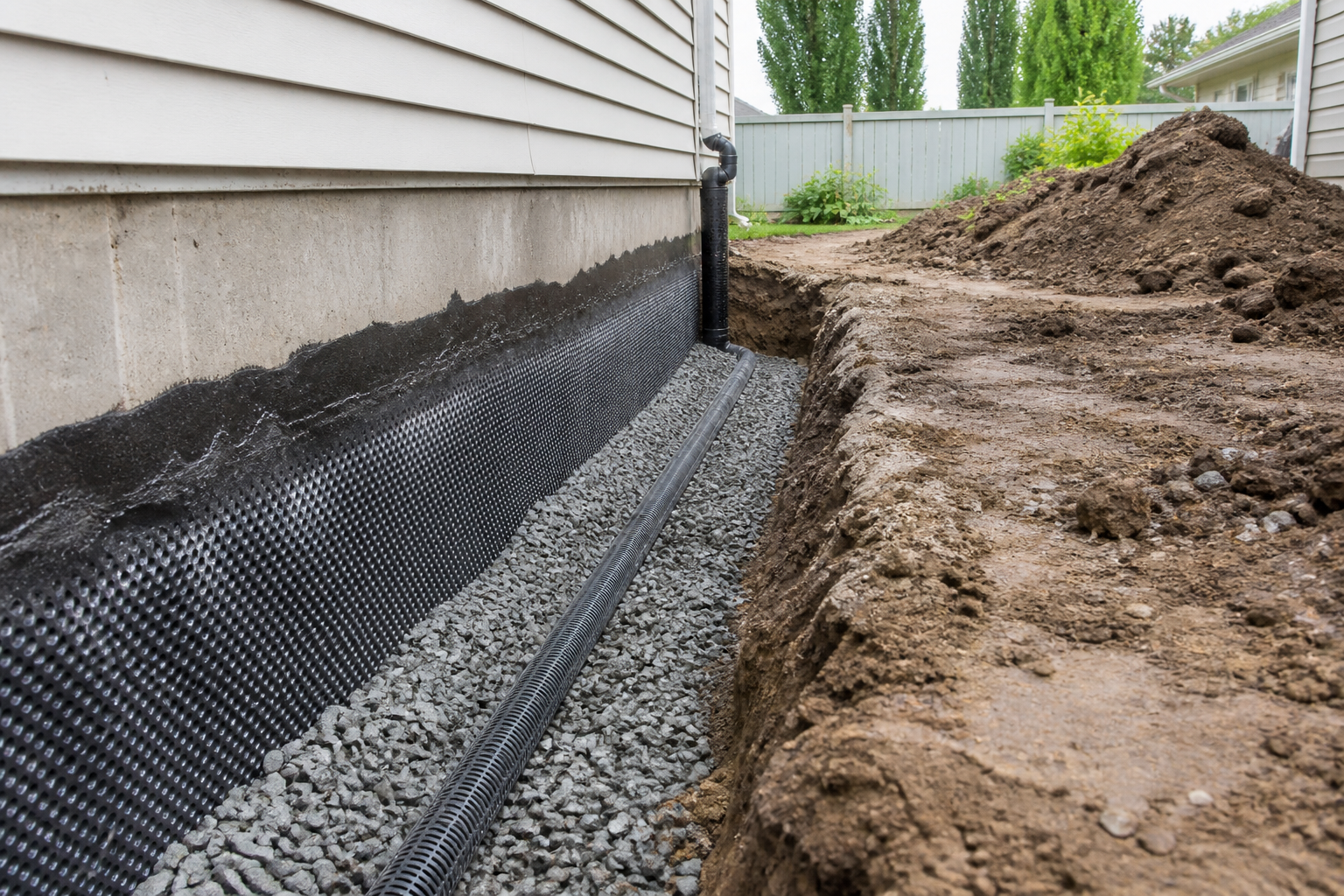
Weeping tile replacement usually means exposing the foundation from the exterior, removing or bypassing failed drainage components, installing a new perimeter drain system, and rebuilding the surrounding drainage zone so groundwater can move away properly again. It can also include waterproofing work on the foundation wall, gravel backfill, filter protection, sump connection work, and final grading adjustments once the excavation is complete.
In Edmonton, older homes may still have outdated clay or damaged drain tile, while newer properties can still develop problems if grading, backfill, or water management around the house was never handled well. Replacement is not just about putting in new pipe. It is about restoring a functional drainage system around the whole foundation area.
Signs Your Foundation Drainage System May Be Failing
1. Basement moisture keeps returning after rain or spring thaw
If moisture problems show up repeatedly during wet periods, the issue may be deeper than a one-time leak. Persistent dampness, musty odours, or water marks along lower walls can indicate that groundwater is not being collected and redirected properly around the foundation.
2. Soil stays wet or soft beside the house
Ground that remains saturated near the foundation can be a warning that water is collecting where it should be draining away. This is especially concerning when the area stays wet well after rainfall or when one side of the house dries much slower than the rest of the yard.
3. You see water staining, efflorescence, or peeling finishes indoors
Mineral deposits, flaking paint, damaged drywall, or recurring wall stains can point to long-term moisture movement through the foundation area. Those symptoms do not automatically confirm failed weeping tile, but they are often part of the same drainage problem.
4. The home is older and the original drainage system may be outdated
Many older Edmonton-area homes have drainage systems that have reached the end of their practical life or were built to older standards. If the property has never had exterior drainage work reviewed, age alone can be a strong reason to inspect the system before moisture problems become more expensive.
5. Grading fixes and downspout changes have not solved the issue
Surface water control still matters, but when positive grading and downspout improvements do not stop the problem, the failure may be happening below grade. Shan Construction often connects drainage diagnosis with grading and excavation work because surface and subsurface water management need to support each other.
6. You are planning foundation repair, waterproofing, or major exterior excavation anyway
If the site already needs foundation exposure for another reason, it is often practical to evaluate the drainage system at the same time. Coordinating the work can reduce repeat excavation and give the full foundation assembly a better long-term result.
Why Edmonton Conditions Make Drainage Problems Harder to Ignore
Edmonton-area foundations deal with freeze-thaw cycles, spring melt, heavy rainfall periods, and clay-heavy soils that can hold moisture against the structure. When water is not redirected properly, these conditions can keep the soil around the foundation wet for longer and increase pressure on basement walls and underground drainage components.
That is one reason drainage issues can seem manageable for a while and then get worse quickly after one wet season. A property may stay mostly dry until the weather pattern, surrounding grade, or soil movement changes enough to expose the weakness in the system.
What Proper Weeping Tile Replacement Usually Includes
Excavation to expose the foundation safely
The replacement process generally starts with careful excavation around the affected foundation walls. This is not simple digging. Access, soil conditions, nearby structures, landscaping, and safe working space all need to be considered. That is why experienced Edmonton excavation crews matter on drainage projects.
Removal or bypass of failed drainage components
Once the wall is exposed, the old drainage components can be assessed for clogging, collapse, damage, or ineffective layout. Depending on the condition, the system may be replaced entirely or rebuilt in the affected areas.
Foundation wall preparation and waterproofing support
Many drainage replacements also include cleaning the foundation surface and addressing waterproofing details before the trench is closed again. This helps the new drainage system work as part of a more complete moisture-control approach.
New drain tile, gravel, and protective backfill
The new system needs proper pipe installation, drainage rock, and surrounding materials that allow water to reach the pipe without quickly clogging it again. Placement quality matters here, not just the fact that a new pipe was added.
Final grading so surface water moves away from the house
Even a new drainage system can underperform if the finished surface keeps directing runoff back toward the foundation. After replacement, the area often needs proper reshaping so the lot sheds water correctly. Shan Construction’s grading service in Edmonton helps tie that final stage together.
When Demolition, Disposal, or Material Delivery Also Matter
Weeping tile replacement is rarely only a pipe job. Some properties need concrete walkways removed, old landscaping features opened up, spoils hauled out, or gravel brought back in efficiently once the repair is underway. On tighter lots, coordinated demolition and disposal or trucking and slinger service can make the job cleaner and reduce extra handling around the property.
This is especially relevant on older homes in Edmonton, St. Albert, Sherwood Park, Beaumont, and Leduc where access can be tighter and finished surfaces around the foundation may already need careful removal and restoration planning.
Projects Where Early Drainage Review Can Prevent Bigger Costs
- Older homes with recurring basement dampness or musty odours
- Properties showing water staining near basement walls after wet weather
- Homes with persistent soft ground or pooling beside the foundation
- Major exterior waterproofing or foundation repair projects
- Lot grading corrections where the moisture problem may not be surface-only
- Basement renovation plans where hidden water risk should be addressed first
- Residential redevelopment or addition work that already requires foundation excavation
In these cases, checking the drainage system earlier is often cheaper than waiting until interior damage, recurring repairs, or more extensive excavation becomes unavoidable.
Why Local Edmonton Experience Matters on Weeping Tile Work
Drainage replacement around a foundation is shaped by local conditions, not just generic installation steps. Edmonton-area crews need to think about frost depth, seasonal runoff, soil behaviour, tight residential access, and how the surrounding grade affects the full system after the trench is backfilled.
Shan Construction serves Edmonton and nearby communities including Leduc, Beaumont, Sherwood Park, St. Albert, Nisku, Spruce Grove, Fort Saskatchewan, and surrounding Alberta areas. Because the company handles drainage, excavation, grading, trucking, demolition, and broader construction services, it can approach foundation drainage work as part of the whole site rather than as an isolated repair.
FAQ About Weeping Tile Replacement in Edmonton
How do I know if I need weeping tile replacement or just a grading fix?
If the problem improves with downspout and grading changes, surface water may have been the main issue. If basement moisture, wet soil beside the foundation, or recurring seepage continues, the drainage system below grade may need inspection and possible replacement.
Can older Edmonton homes still have original drain tile?
Yes. Many older homes still have aging drainage systems or components that no longer perform well. If the property has recurring moisture issues and no known drainage replacement history, it is reasonable to have the system reviewed.
Does weeping tile replacement require excavation around the house?
In most full replacement cases, yes. Exterior access is usually needed to expose the foundation, replace the drainage components, and rebuild the surrounding drainage zone correctly.
Can you replace weeping tile and correct grading in the same project?
Yes. That is often the better approach because surface and subsurface drainage problems are connected. Coordinating both services can improve the long-term result and reduce repeat work.
Does Shan Construction only do weeping tile work in Edmonton?
No. Shan Construction also serves nearby communities such as Leduc, Beaumont, Sherwood Park, St. Albert, Nisku, Spruce Grove, Fort Saskatchewan, and other surrounding Alberta locations depending on the project scope.
Address the Drainage Problem Before Foundation Moisture Gets Worse
Weeping tile replacement in Edmonton is usually most effective when the issue is addressed before moisture damage spreads and before repeat temporary fixes turn into a larger repair bill. A proper drainage solution should look at the full site condition, not only the symptom showing up inside the basement.
If you are dealing with recurring foundation drainage concerns in Edmonton or a nearby Alberta community, Shan Construction can review the site, coordinate the excavation and grading, and complete the weeping tile work needed to help protect the property long term. Visit Shan Construction’s Edmonton construction contractor page to request a quote.