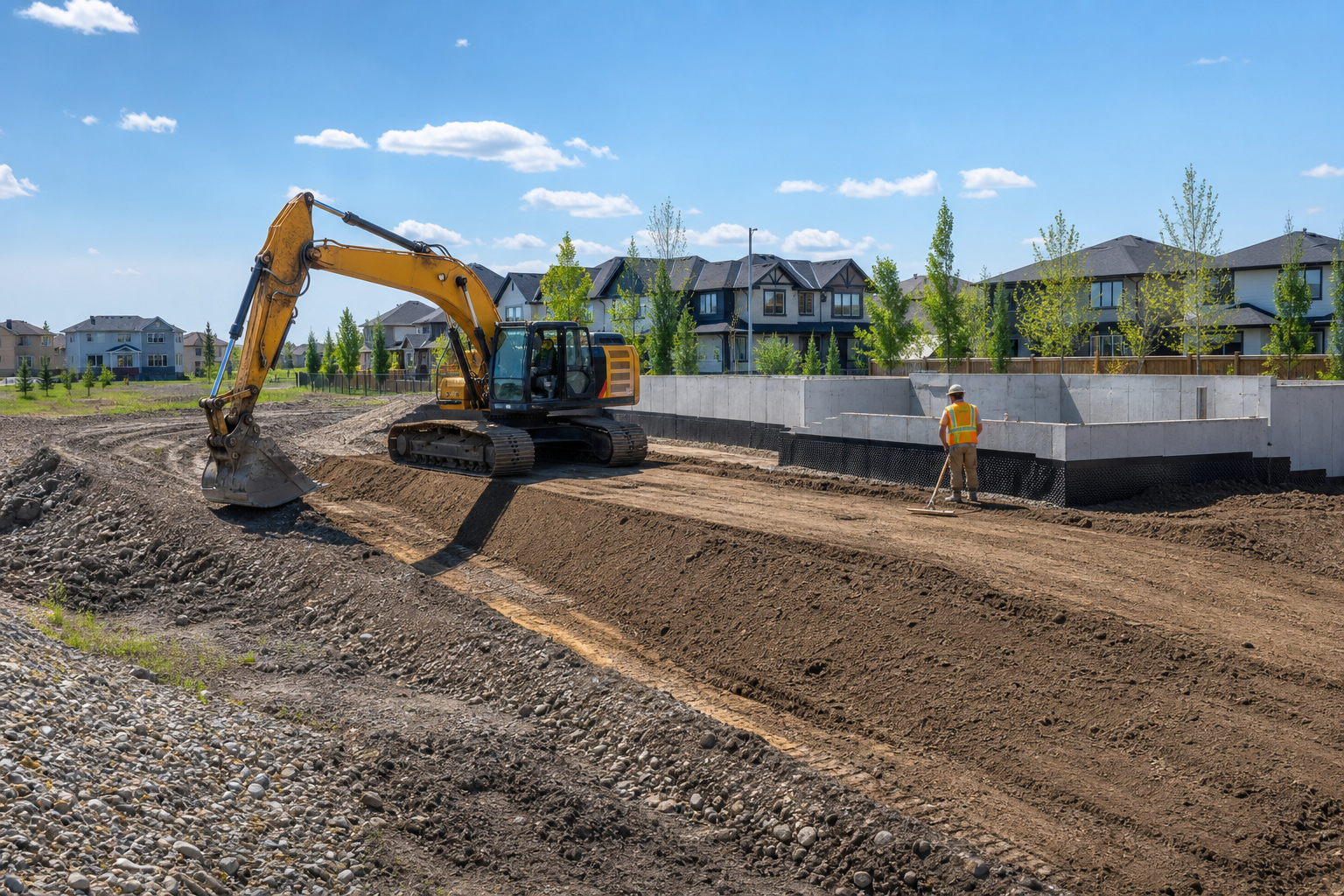
Final grading in Edmonton is often treated like the cleanup stage at the end of a build. In reality, it is one of the most important steps for protecting the foundation, managing water, and making sure the site performs properly after the excavation equipment leaves.
For homeowners, builders, and property managers in Edmonton, Leduc, Beaumont, St. Albert, Sherwood Park, Nisku, Spruce Grove, Fort Saskatchewan, and nearby Alberta communities, the slope around a building can affect basement moisture, surface drainage, landscaping performance, and how well the lot handles rain and snowmelt. A site can look finished and still have grading problems that show up later.
Shan Construction provides excavation and grading service in Edmonton along with related groundwork services such as weeping tile installation, cribbing, trucking and slinger support, demolition, and broader construction services. That matters because grading works best when the contractor understands how the full site comes together, not just how to make the yard look level for one day.
What Final Grading Actually Means
Final grading is the process of shaping the finished surface around the structure so water drains away properly and the lot is prepared for the next use. That may include adjusting elevation near the foundation, setting slopes across the yard, building swales, preparing driveways or pads, correcting low spots, and coordinating how soil, gravel, and drainage features work together.
It is different from rough grading. Rough grading gets the site close to the intended elevations during early earthwork. Final grading is more precise. It is the stage where details matter because small elevation mistakes can send water back toward the house, garage, retaining wall, or future landscaped areas.
Why Grading Problems Often Show Up After the Job Looks Finished
Many Edmonton-area grading issues do not appear on a dry day. They show up after a heavy rainfall, during spring thaw, or once the first season of settlement changes how the lot drains. A yard may look clean and smooth when the equipment leaves, but if the slope is too flat or water has nowhere to go, the real problem shows up later.
In this region, grading decisions have to account for snow, freeze-thaw cycles, clay-heavy soil conditions, and the way water moves between neighbouring lots. That is why final grading should not be handled as a cosmetic afterthought. It is part of foundation protection.
How Final Grading Connects to Excavation, Foundation Work, and Drainage
Good grading starts earlier than most people realize. The final surface only performs well when the excavation, base preparation, and drainage planning underneath it were done correctly.
Excavation sets the base
If the original cut, backfill, or soil handling was poorly managed, final grading becomes harder to get right. Unsuitable fill, inconsistent compaction, or rushed backfill can lead to settlement and drainage changes after completion. That is why many owners prefer one contractor who can coordinate both excavation and grading.
Foundation and cribbing affect the working area
New home builds, additions, garage pads, and structural work often involve tight tolerance around footings, walls, and formed concrete. If the foundation area was built without careful coordination, the grading crew may be correcting avoidable access and elevation problems later. Shan Construction also handles cribbing work in Edmonton, which helps tie the early and later phases together.
Weeping tile needs surface water control too
A weeping tile system helps manage subsurface water, but it is not a substitute for proper surface slope. If runoff is allowed to collect near the home, even a good drainage system can be forced to work harder than it should. Final grading and weeping tile installation should support the same goal: move water away from the structure before it becomes a long-term problem.
Common Final Grading Problems Edmonton Property Owners Miss
Most grading failures are not dramatic. They are small site decisions that create recurring moisture or maintenance issues.
- Flat or reverse slope along the foundation wall
- Low spots where runoff collects beside the building
- Poor transitions between the house, driveway, garage pad, and yard
- Topsoil placed over unstable or poorly compacted fill
- Drainage paths that send water toward a neighbour or back toward the structure
- Downspout discharge areas that were never integrated into the grade plan
- Final landscaping done before the lot had time to settle properly
These issues can lead to muddy side yards, pooling near basement walls, erosion, soft ground beside sidewalks, or recurring complaints that a newer property never seems to dry out properly after wet weather.
What Good Final Grading Usually Includes
Every property is different, but good grading work usually includes more than simply dragging soil around the lot.
Positive slope away from the foundation
The finished surface around the structure should encourage water to move away, not sit beside the wall. Exact measurements depend on the site, but the principle is simple: the grade near the building should not trap runoff against the foundation.
Thoughtful water routes across the lot
Water still needs somewhere to go after it leaves the house. That may involve side-yard flow, a swale, a controlled low point, or coordination with the surrounding site plan. A good contractor does not only think about the first few feet around the structure. They look at the whole drainage pattern.
Compaction and stable fill where needed
If the grade is built over loose material, settlement can undo the work. That is especially important near foundations, service trenches, garage pads, retaining areas, and any place the grade transitions from excavated to backfilled ground.
Coordination with driveways, sidewalks, and landscaping
Finished grade should work with concrete, hardscape, sod, topsoil, and access routes. A lot can develop drainage issues when each trade finishes its piece separately and no one checks how the full surface will perform once the project is complete.
When to Fix Grading Before It Turns Into a Bigger Foundation Problem
You do not always need a major excavation project to correct grading. But it is smart to look at the site early if you notice warning signs such as water collecting near the house, damp soil along one side yard, erosion channels after rain, or settlement around backfilled areas.
For homeowners, this can be especially important after a new build, a garage project, drainage repair, or landscaping work that changed the lot elevations. For builders and developers, it matters before handoff because drainage complaints are easier to prevent than to revisit.
Typical Edmonton-Area Projects Where Final Grading Matters
- New home foundations and infill residential construction
- Garage pads, shop pads, and detached building areas
- Home additions and basement excavation projects
- Weeping tile replacement or exterior waterproofing work
- Driveway and approach preparation
- Lot drainage correction on existing residential properties
- Commercial and light industrial site preparation in areas like Nisku or Acheson
- Acreage grading where access, runoff, and long drainage paths need planning
Why a Local Edmonton Grading Contractor Makes a Difference
Edmonton-area sites are not all the same, but they do share regional realities: clay soils, seasonal frost movement, spring runoff, and subdivisions where one lot can affect another. A local contractor is more likely to understand how those conditions influence final grade decisions and which surrounding services may need to be coordinated at the same time.
Shan Construction works on residential and commercial groundwork in Edmonton and nearby communities such as Leduc, Beaumont, Sherwood Park, St. Albert, Spruce Grove, Fort Saskatchewan, and surrounding Alberta areas. When grading, excavation, and drainage planning are handled together, the result is usually more durable and easier to maintain.
FAQ About Final Grading in Edmonton
What is the difference between rough grading and final grading?
Rough grading gets the site close to target elevations during the early earthwork phase. Final grading is the more precise shaping of the finished surface so water drains properly and the lot is ready for landscaping, concrete, or project completion.
Can poor grading cause water problems even if weeping tile is installed?
Yes. Weeping tile helps with subsurface water, but surface runoff still needs to move away from the home. If the finished grade sends water toward the foundation, moisture pressure and drainage issues can still develop.
Do new homes in Edmonton still need grading corrections after construction?
Sometimes they do. Settlement around backfilled areas, rushed finishing, or poor water routing can create issues after the build looks complete. That is why final grading should be checked carefully before and after the site is handed over.
Can Shan Construction handle grading together with excavation or drainage work?
Yes. Shan Construction provides grading together with excavation, weeping tile, cribbing, trucking, and related groundwork services in Edmonton and surrounding areas. That combined approach can reduce delays and improve coordination.
Do you only work in Edmonton?
No. Shan Construction also serves nearby communities such as Leduc, Beaumont, St. Albert, Sherwood Park, Nisku, Spruce Grove, Fort Saskatchewan, and other surrounding Alberta locations depending on the project scope.
Get the Grade Right Before Moisture Problems Start
Final grading is not just about appearance. It helps protect the foundation, support drainage, and give the rest of the site a better chance to perform properly through Edmonton weather conditions.
If you need help with final grading in Edmonton or nearby communities, Shan Construction can assess the lot, coordinate the groundwork, and connect grading with the excavation, drainage, and foundation-related services that affect the long-term result.